
Marketing Tips for Roofers | Increase Leads & Grow Your Roofing Business
Roofing is a high-demand, high-competition industry, where homeowners and businesses need fast, reliable, and professional service. Marketing mistakes can cost valuable leads and revenue, especially in areas with multiple roofing contractors.
This post highlights the top marketing mistakes roofers make and how to fix them, helping your business attract more qualified leads and grow sustainably.
1. Not Ranking for Local Searches
Local search visibility is one of the most critical revenue drivers for roofing companies. When homeowners need a roof repair, storm damage inspection, or full replacement, they almost always type urgent phrases like:
- “roofer near me”
- “emergency roof repair [city]”
- “roof replacement estimate near me”
If your roofing business isn’t appearing in Google’s Local Pack (the top 3 map results) or on the first page of organic results, you’re losing high-intent leads to competitors—often without even realizing it.
Common Issues That Hurt Local Rankings
Most roofing companies struggle with local SEO because of avoidable problems such as:
- An incomplete or unoptimized Google Business Profile (GBP)
- Incorrect or inconsistent Name, Address, Phone (NAP) across directories
- Missing roofing-related categories
- Outdated photos or no photos
- No recent reviews
- Repetitive or low-value website content that doesn’t satisfy search intent
Each of these weakens your business’s local authority and prevents Google from confidently showing your roofing company to nearby searchers.
Actionable Fixes to Improve Local Rankings
1. Fully Optimize Your Google Business Profile (GBP)
Your GBP is the single most important local SEO asset for roofing contractors—especially when customers have emergencies. To rank stronger:
- Add accurate business info, including services and service areas
- Upload before/after roofing photos, team photos, and job site photos
- Add roofing-specific services like:
- Roof Replacement
- Storm Damage Repair
- Emergency Roof Patching
- Commercial Roofing
- Metal Roofing
- Use posts to promote seasonal offers or maintenance tips
- Keep hours updated, especially after storms or during busy seasons
Google Business Profile Help → https://support.google.com/business
2. Improve NAP Consistency Across the Web
Google compares your business details across the web to determine legitimacy. If your address or phone number differs on Yelp, Angie’s, HomeAdvisor, BBB, or dozens of smaller directories, your authority weakens.
Your best solution is centralized control of listings:
Oaklea Listings Management → https://oakleamediasolutions.com/listings-management
This ensures every directory displays the same accurate information, improving trust and boosting local ranking signals.
3. Create Location-Specific Service Pages
Instead of a single “Service Area” page, create individual pages for each city or region you serve. Example:
- Roof Replacement in Billings, MT
- Storm Damage Roofing in Helena, MT
- Commercial Roofing in Great Falls, MT
These pages help you rank when customers search:
- “best roofer in [city]”
- “roof inspection [city]”
Each page should include:
- A local hero image
- A city-specific headline
- Roofing services offered in that location
- A map embed
- A local testimonial
- A strong CTA
4. Upgrade Your On-Page SEO for Roofing Keywords
Avoid stuffing broad or generic keywords. Instead, use intent-based, localized searches, such as:
- “roof leak repair near me”
- “hail damage roofer [city]”
- “replace asphalt shingles [city]”
- “licensed & insured roofing contractor near me”
Tie these into:
- H1 and H2 headings
- Meta descriptions
- Image alt text
- Service page content
- Your blog strategy
Oaklea SEO Services → https://oakleamediasolutions.com/seo
5. Increase Your Review Count and Velocity
Google prioritizes roofers with consistent, fresh reviews. The roofing industry is built on trust, and GBP reviews serve as modern referrals.
Improve ranking by:
- Asking for a review after every completed job
- Automating your review-gathering strategy
- Responding quickly to all reviews (positive or negative)
- Mentioning services in replies, e.g.,
“Thank you for trusting us with your roof replacement in Missoula!”
Oaklea Reputation Management →oakleamediasolutions.com/reputation-management
BrightLocal Reviews Guide → https://www.brightlocal.com/learn/local-seo/reviews/
6. Use Local Schema Markup
Adding local business schema makes it easier for Google to understand:
- Your service areas
- Your roofing services
- Your contact info
- Your hours
- Your geographic relevance
This increases your chances of appearing in rich results and map listings.
If you want, I can generate roofing-specific LocalBusiness schema tailored to your business.
7. Publish Seasonal & Storm-Triggered Content
Roofing searches spike after:
- Hail storms
- Wind damage
- Heavy snow
- Summer heat
- Fall maintenance season
Publishing content like “What to Do After a Hailstorm Damages Your Roof” or “Winter Roofing Checklist for Homeowners” boosts local visibility because Google sees your site offering current, relevant help.
Why This Matters for Roofers
Roofing is a high-ticket industry, and customers rarely shop for more than 1–2 quotes. If you’re not ranking locally:
- Your competitors capture those leads
- You lose visibility during weather events
- Your GBP remains underdeveloped
- Your website becomes less competitive
- Your cost-per-lead rises
Local dominance = more calls, more inspections, more replacements, and more revenue.
If you’d like, I can expand this even further with:
✅ Roofing keyword clusters
✅ Sample local service page layout
✅ Roofing GBP category list
✅ Roofing alt-text template
✅ Anchor links for the blog
2. Weak Website Conversion
It doesn’t matter how many visitors land on your site—if they don’t convert into calls, estimates, or form submissions, the traffic is wasted. Many roofing websites look “fine” at first glance but fail at guiding the homeowner toward taking action. A high-converting roofing website needs to be fast, trustworthy, mobile-friendly, and offer zero friction from the moment a visitor arrives.
Here’s how roofers can dramatically improve conversion rates:
1. No Clear or Compelling Call-to-Action (CTA)
A surprising number of roofing sites bury their CTA below the fold or scatter multiple conflicting CTAs across the page. Homeowners don’t want to hunt for how to request a quote — especially in an emergency.
Fix it:
- Place your primary CTA (“Request a Free Roof Inspection” or “Get a Same-Day Estimate”) in the header and hero section.
- Use contrasting buttons that stand out visually.
- Repeat the CTA every 2–3 sections so visitors never lose the thread.
- Make sure at least one CTA links to a fast, simple form—not a long questionnaire.
Pro tip: Use action-oriented verbs (“Repair,” “Inspect,” “Restore,” “Protect”), not vague language (“Contact Us”).
2. Slow Load Speeds That Cause Visitors to Bounce
Roofing customers are often dealing with stressful situations — leaks, storm damage, insurance timelines — and they won’t wait 5–10 seconds for a page to load. Delay = instant bounce.
Fix it:
- Compress large images and convert them to next-gen formats (like WebP).
- Use a speed-optimized hosting plan.
- Defer unused JavaScript and CSS.
- Consider a CDN if you serve multiple states or large regions.
Google’s research shows that every additional second of load time can drop conversions by up to 20%.
3. Lack of Trust Signals (One of the Worst Roofing Mistakes)
Roofing is a high-trust industry. Homeowners are cautious, often skeptical, and want proof that your company is legitimate and reliable.
High-performing roofing sites include trust elements such as:
- Badges (licensed, insured, bonded, GAF/IKO/ CertainTeed certifications)
- Social proof (star rating, review count, testimonials)
- Before-and-after images
- Project portfolios
- Service area map
- Guarantee/warranty details
Fix it:
Add a trust bar near the top of the site showcasing your most important credibility markers. You can also link to your Google Business Profile for social proof.
Google Business Profile
4. Poor Mobile Experience (Huge Lost Conversions)
Most roofing browsing happens on mobile—during lunch breaks, on-site, or while inspecting damage after a storm. If the mobile version of your site looks cramped or broken, you’re losing leads.
Fix it:
- Ensure clickable phone numbers (tap-to-call is essential).
- Use a sticky CTA button at the bottom of mobile screens.
- Eliminate pop-ups that block key content.
- Shorten forms for mobile users (name, address, phone, service needed).
Small screens = small patience.
5. Not Providing Clear Service Paths
Many roofing websites overwhelm visitors with generic information. People want simple, clear navigation—especially when making an urgent repair decision.
Fix it:
Create dedicated pages for your core services:
- Roof repair
- Roof replacement
- Storm damage repair
- Insurance claims assistance
- Gutter installation
- Roofing inspections
Service-Specific Optimization Guide
Each should include CTAs, FAQs, benefits, and visuals.
6. Weak or Generic Copy That Doesn’t Speak to Homeowners
A roofing website must speak to pain points, urgency, local expertise, and peace of mind—not generic “We do roofs” language.
High-converting roofing copy includes:
- Local credibility (“Serving homeowners in Helena, Great Falls, and the surrounding area”)
- Specific expertise (“30-year shingles,” “Class 4 impact-resistant roofs,” “insurance claims handled in-house”)
- Emotional reassurance (“Protect your home and family from future leaks or structural damage”)
- Risk-reversal (“Free inspection,” “Lifetime workmanship warranty,” “No-obligation quote”)
Fix it:
Rewrite your site copy to be:
- Clear
- Conversational
- Customer-focused
- SEO-friendly
- Emotionally reassuring (“We show up on time, protect your property, and clean up everything—no nails left behind.”)
7. No Tracking or Conversion Measurement
Roofers often have no idea which pages actually produce leads. Without tracking, your website is guessing—not working.
Fix it:
- Set up Google Analytics 4
- Track calls (using call tracking software)
- Track form submissions as events
- Monitor which pages drive conversions—not just views
- Use UTM parameters on ads, GBP links, and email marketing
Data tells you what to fix next.
8. Missing Live Chat or Instant Contact Options
Homeowners want fast answers—especially during emergencies. Many roofing leads convert through:
- Live chat
- Website chatbots
- SMS response
- Tap-to-call buttons
Fix it:
Add a simple chat option and a prominent phone number in the header and hero.
9. No Visual Proof of Your Work
Roofing is proof-driven. Homeowners can’t “see” quality roofing—but they can see photos.
If your website lacks before-and-after images, aerial shots, or project galleries, you’re losing conversions.
Fix it:
Add a dynamic project showcase with filters like:
- Roof type
- Color
- Material
- City
- Damage type
- Insurance vs. out-of-pocket jobs
Include at least 20–50 photos. You already know: proof sells.
Final Takeaway
A roofing website shouldn’t just “look good.” It must convert.
Clear CTAs + trust + speed + visual proof + mobile usability = more inspections, more estimates, more roofs replaced.
3. No Review Strategy
If you fail to gather new reviews consistently, your roofing business risks:
- Falling behind competitors who rapidly grow their review count
- Poor visibility in local search results
- Lower trust from new leads
- Being overlooked by homeowners comparing multiple contractors
- Losing out on storm-related insurance leads (where trust is critical)
Even a company that does excellent work will look untrustworthy if its last review is from 2022.
How to Build a High-Converting Roofing Review Strategy
1. Ask for Reviews at the Right Time
Timing is everything. The best time to request a review is:
- Immediately after the job is completed
- After final cleanup (right when homeowners are happiest)
- When a homeowner compliments the crew or process
- After an inspection or insurance approval goes smoothly
Train your team to listen for “thank you” moments — that is your cue.
2. Make Leaving a Review Dead Simple
If you make homeowners “search for your profile,” very few will follow through.
Fix it:
Create a direct review link for your Google Business Profile:
👉 Google Business Profile
Then send it via:
- Text message
- Email follow-up
- A QR code on your business card, estimate sheet, or yard sign
- Automated software (Oaklea can handle this for you)
The fewer clicks, the more reviews.
3. Use Follow-Up Automation
Most roofing companies ask once and hope for the best. Effective companies use automation to ensure consistent results.
Automated systems can:
- Send reminders
- Send personalized thank-you messages
- Drip follow-up texts
- Track who has or hasn’t left a review
Automation turns inconsistent review collection into a predictable process.
4. Respond to Every Review — Even the Good Ones
Roofing competitors often ignore their reviews, but responses show:
- Professionalism
- Appreciation
- Customer care
- Transparency
Google has confirmed that review responses improve local SEO performance and customer trust.
Positive review?
➡️ Thank them.
Negative review?
➡️ Respond calmly, professionally, and with empathy. (You already teach businesses this.)
5. Showcase Reviews Across Your Website
Don’t hide your best social proof. Display reviews:
- On the home page
- On service-specific pages
- In the footer
- In your quote forms
- In before/after galleries
- Near CTA buttons (“Rated 4.9 with 200+ local reviews”)
👉 Service-Specific Optimization Guide
High-visibility reviews increase conversions dramatically.
6. Use Photos & Videos in Your Review Strategy
Roofing is visual. Encourage homeowners to share:
- Before/after shots
- Drone video
- Clips of finished work
- Testimonials on-site
User-generated content is extremely persuasive—and boosts conversion rates.
7. Monitor Reviews on All Platforms, Not Just Google
While GBP is the most important, also monitor:
- Yelp (if relevant in your region)
- BBB
- Nextdoor
- HomeAdvisor/Angi (even if you don’t love them)
A strong multi-platform presence increases your digital footprint.
Final Takeaway
Not having a review strategy is silently costing roofing businesses thousands in lost leads every year. A consistent, automated, customer-friendly system turns your happy customers into your most powerful marketing asset.
For further reading, check out BrightLocal Reviews Guide → https://www.brightlocal.com/learn/local-seo/reviews/
4. Not Showcasing Before/After Work
Before-and-after visuals are one of the most powerful trust-builders in the roofing industry, yet many roofers fail to use them consistently. Homeowners want proof that the contractor they’re considering can deliver high-quality craftsmanship — and nothing communicates that better than visual transformations.
Most people can’t easily evaluate roofing quality from written descriptions alone. But when they see a side-by-side comparison of damaged shingles next to a brand-new architectural roof, or a storm-struck home restored to perfection, they instantly understand the value of your work.
If you’re not showcasing before/after photos, you’re missing out on a massive opportunity to convert site visitors into high-intent leads.
Why Before/After Photos Matter in Roofing
Roofing is a high-cost, high-risk service. Customers want reassurance that:
- You do high-quality work
- You deliver what you promise
- You’ve handled projects similar to theirs
- You can solve problems caused by storms, leaks, or poor installation
- Your cleanup, flashing, decking, and finishing details are professional
Written claims won’t convince them — visual proof will.
Displaying before/after photos helps you win trust much faster by showing:
- The severity of the original issue
- The professionalism of the finished work
- The quality of materials used
- Your ability to handle complex repairs or full roof replacements
How to Use Before/After Photos to Boost Your Roofing Leads
1. Add Before/After Galleries to Service Pages
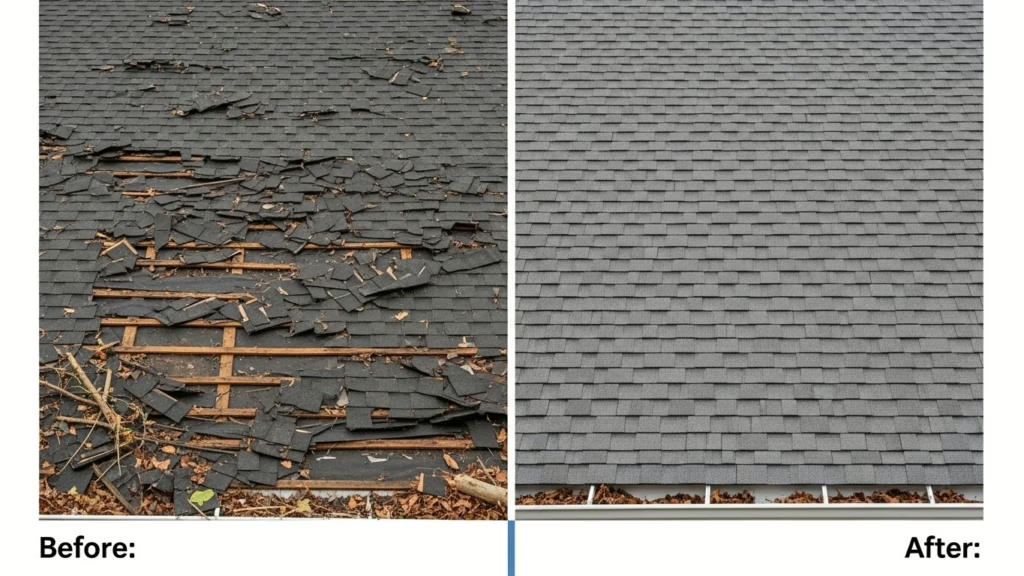
Showcase transformations for:
- Full roof replacements
- Storm damage repair
- Hail or wind-damaged shingles
- Insurance restoration projects
- Flat roofing vs pitched roofing updates
- Commercial roofing improvements
Customers comparing contractors will choose the roofer who shows real work over the one who doesn’t.
2. Use Before/After Sliders on Your Website
Modern sliders let visitors drag a bar to compare “before” vs. “after.”
These are extremely engaging and hold attention — which Google loves.
Tip: Add these to:
- Your homepage
- Service-specific pages
- Case study pages
- Blog posts
- Project highlight areas
3. Post Before/After Reels on Social Media
Short-form video gets engagement fast.
Ideas include:
- Drone flyovers before/after
- Quick 5-second flip transitions
- Storm damage → full replacement
- Commercial TPO before → pristine white after
This helps build brand authority and boosts your local audience trust.
4. Use Before/After Footage in Ads
Roofing ads perform dramatically better when real work is shown rather than stock images. Visual proof = conversion power.
Your ads can highlight:
- Insurance claim success stories
- Old asphalt replaced with architectural shingles
- Color upgrades
- Fascia + gutter repairs
- Emergency repair work
5. Use Customer Testimonials Next to Before/After Photos
Pairing visuals with testimonial quotes creates a powerful combination.
Example:
“We thought the storm had destroyed our roof beyond repair. These guys made it look brand new within a week!”
This adds emotional weight and enhances credibility.
6. Improve SEO With Before/After Content
Before/after images contribute to SEO when optimized properly:
- Add descriptive alt text (ex: “Before and after roof replacement in Billings, MT”)
- Add location keywords
- Embed project descriptions
- Use schema markup for image objects (optional but powerful)
This improves your visibility for searches like:
- “roofing contractor near me”
- “roof replacement photos”
- “roof repair before and after”
- “storm damage roofing examples”
7. Add Before/After Images to Your Google Business Profile
GBP galleries are one of the top places customers look when comparing roofers.
Uploading transformation photos boosts both:
- Profile visibility
- Conversion rate
- Map pack ranking
Final Takeaway
Roofing companies that use visual proof win more customers — period. Before/after photos turn skepticism into confidence and drive higher conversion rates across your website, social media, ads, and Google Business Profile. If you’re not using them, you’re leaving trust (and leads) on the table.
For additional information, please peruse BrightLocal Photo Guide → https://www.brightlocal.com/learn/local-seo/local-business-photos/
5. Ignoring Seasonal or Niche Content
RRoofing demand isn’t consistent year-round — and that’s exactly why seasonal and niche content is such a powerful marketing advantage. Homeowners search for specific roofing problems at specific times of the year. If your website and Google Business Profile aren’t publishing content that aligns with these seasonal needs, you’re losing high-intent traffic to competitors who are.
Creating strategic content around storms, weather patterns, insurance deadlines, and regional roofing issues helps your business show up right when homeowners need you most — not months later.
Most roofers publish generic content like “Why Choose Asphalt Shingles,” but generic content doesn’t rank for urgent homeowner problems. Seasonal and hyper-specific content does.
Why Seasonal & Niche Content Is Crucial
Roofing issues follow predictable patterns. Homeowners look for help when:
- Winter creates ice dams
- Summer heat damages shingles
- Storm season brings hail or wind damage
- Fall raises maintenance needs before winter
- Spring exposes leaks after snow melt
This means Google searches spike around specific issues, such as:
- “roof leak after storm”
- “hail damage roof repair near me”
- “best roof for hot climates”
- “ice damming repair”
- “roof inspection before winter”
If you publish content tailored to these needs, you rise to the top of search results while competitors stay invisible.
👉 SEO Services – Seasonal roofing content improves search performance and positions you as a local expert.
Examples of High-Value Seasonal Roofing Content
1. Storm Season Content (Spring & Summer)
This is prime time for roofing leads — but only if you’re visible.
Create content such as:
- “Do You Need a Roof Inspection After Hail?”
- “Signs of Wind Damage to Your Roof”
- “How to File a Roofing Insurance Claim After a Storm”
- “What to Do When Asphalt Granules Show Up in Your Gutters”
This increases your chances of showing up for urgent, same-day searches.
2. Winter Roofing Content
Winter produces severe roofing issues, and homeowners scramble to fix them.
Create content for:
- Ice damming
- Snow load damage
- Heat loss through the roof
- Attic ventilation issues
- Frozen shingles or brittle shingle cracking
Winter roofing content often gets less competition, making it a great ranking opportunity.
3. Fall Maintenance Content
Fall is the season homeowners prepare their roofs for winter.
High-value topics:
- “Fall Roof Maintenance Checklist”
- “Why You Need a Pre-Winter Roof Inspection”
- “How to Clean Gutters Safely Before Winter”
- “Best Roofing Materials for Cold Climates”
These posts convert extremely well because they solve immediate, seasonal concerns.
4. Summer Heat & UV Damage Content
In hot regions, you can dominate seasonal search traffic with content such as:
- “How Heat Damages Asphalt Shingles”
- “Cool Roofing Options for Hot Weather”
- “UV Damage: What It Looks Like and How to Fix It”
This builds authority and relevance for homeowners preparing for extreme heat.
5. Regional & Niche Roofing Issues
Every local market has unique roofing problems. This is where niche content shines.
Examples:
- Coastal markets: salt corrosion, hurricane-grade shingles
- Midwest: hail-resistant roofing options, wind damage
- Mountain states: ice dams, snow load, steep-slope roofing
- Desert climates: sun damage, tile roof fading
Niche content helps you rank for geo-specific roofing queries — which can be an SEO goldmine.
👉 Website Development Services – Add seasonal landing pages or blog posts to capture these search trends.
6. Insurance-Related Seasonal Content
Homeowners often feel overwhelmed after storms or leaks. Publishing seasonal insurance help such as:
- “How to Work With Your Insurance Adjuster After Roof Damage”
- “What Homeowners Insurance Covers (and Doesn’t Cover) for Roofing”
- “When to File a Roofing Claim vs. Pay Out of Pocket”
positions your roofing company as a trusted advisor, not just a contractor.
How Seasonal Content Boosts Your Local SEO
Seasonal roofing posts help you:
- Rank for long-tail keywords
- Build topical authority
- Stay active in Google’s eyes
- Generate backlinks
- Capture high-intent searchers during peak seasons
Pair this strategy with:
👉 Google Business Profile
Use seasonal images, posts, and updates to stay relevant in the local map pack.
Final Takeaway
Roofers who ignore seasonal or niche content lose highly qualified leads to competitors who publish content around weather patterns, roofing problems, and insurance issues. Strategic seasonal content positions your roofing company as the go-to expert — exactly when homeowners are experiencing real problems.
Publishing this content consistently is one of the fastest ways to boost both local rankings and lead conversions.
Oaklea SEO Services → https://oakleamediasolutions.com/seo
More interesting ideas at BrightLocal Local SEO Guide → https://www.brightlocal.com/learn/local-seo/
6. Poor Call Handling or Slow Response
In the roofing industry, speed and professionalism in responding to inquiries directly determine whether a lead converts into a customer. Homeowners often have urgent issues — a leaking roof, storm damage, or a sudden insurance claim — and they will naturally contact the first roofer who responds clearly and promptly. If your team misses calls, delays callbacks, or provides inconsistent information, you risk losing high-intent leads to competitors who are faster and more organized.
Poor call handling isn’t just about missed revenue; it also damages your reputation. Negative experiences can lead to poor online reviews and reduced trust among potential customers.
Why Fast Response Matters in Roofing
Roofing is a high-stakes, time-sensitive industry. Homeowners often compare multiple companies simultaneously, especially during storm events. The business that answers quickly and professionally almost always wins the job.
Key reasons fast response matters:
- Leads go cold quickly: Research shows that leads contacted within 5 minutes are 21x more likely to convert than those contacted after 30 minutes.
- First impressions last: Slow, unprofessional, or inconsistent communication immediately reduces trust.
- Urgency-driven decisions: Many homeowners need emergency repairs; delays can push them toward competitors.
- Insurance deadlines: A prompt response can help homeowners file claims faster, positioning your team as a trusted partner.
👉 Google Business Profile – A properly optimized profile ensures your phone number, hours, and messaging are up-to-date for instant contact.
How to Improve Call Handling and Response
1. Train Your Team
Every employee who handles calls should know:
- How to answer professionally (name, company, greeting)
- How to capture essential information (address, phone, roofing issue)
- How to qualify leads efficiently without sounding rushed
- How to schedule follow-ups promptly
Role-playing scenarios help prepare staff for common roofing situations, from storm damage inquiries to insurance claim questions.
2. Implement a Call Tracking & Management System
Call tracking software ensures no call goes unanswered and provides insight into lead sources.
Benefits include:
- Knowing which campaigns drive calls
- Monitoring response times
- Training staff based on call recordings
- Routing urgent leads to the appropriate team members
3. Provide Multiple Contact Options
Not every lead wants to call immediately. Offering variety in communication increases conversion:
- Tap-to-call buttons on your website
- SMS or text messaging options
- Live chat or chatbots for immediate engagement
- Contact forms with auto-response confirmations
Each option should clearly state when someone will respond and provide reassurance that the lead is a priority.
4. Set Internal Response Standards
Your team should follow a defined SLA (Service Level Agreement) for responding to leads:
- Answer all calls within 3 rings
- Respond to voicemails or emails within 15–30 minutes
- Ensure emergency requests are flagged and routed immediately
A consistent process builds trust and increases your chances of winning new business.
5. Follow Up Even if You Missed the First Call
Sometimes calls are missed due to high demand or off-hours inquiries. Quick follow-up is crucial:
- Return the call same day if possible
- Acknowledge the delay and apologize briefly
- Ask the right questions to qualify the lead
- Offer flexible scheduling for inspections or repairs
Failing to follow up quickly signals unreliability, which homeowners notice.
6. Record & Analyze Calls
Analyzing calls helps you understand:
- Common homeowner concerns
- Language that converts better
- Staff training needs
- Seasonal patterns in inquiries
Regular reviews improve team performance and ensure high-quality customer interactions over time.
Why This Section Matters for Roofers
Fast, professional response is the backbone of roofing lead conversion. Slow, inconsistent, or unprofessional call handling can:
- Lead to lost revenue
- Hurt your online reputation
- Reduce your ROI on marketing campaigns
- Give competitors an easy advantage
When combined with a strong Google Business Profile and optimized contact channels, excellent call handling ensures that every inbound inquiry has the highest probability of converting into a paying customer.Roofing is often urgent—leaks, storm damage, and emergency repairs require fast responses. Slow or unprofessional handling loses leads immediately.
Fixes:
- Use professional phone systems with call forwarding or virtual reception
- Train staff on answering calls quickly and professionally
- Track missed calls and follow up promptly
- Offer after-hours support for emergencies
Oaklea Web Development → https://oakleamediasolutions.com/website-design
Find more information about call tracking at BrightLocal Call Tracking Guide → https://www.brightlocal.com/learn/local-seo/call-tracking/
7. Not Using Service-Specific Pages
Many roofing websites make the critical mistake of lumping all their services onto a single generic “Services” page. While this may look organized at first glance, it significantly hurts both SEO performance and conversion rates. Homeowners search for very specific roofing solutions, such as “emergency roof repair near me” or “flat roof replacement in [city],” and they want content that directly addresses their problem.
If you don’t have dedicated service pages, you risk:
- Missing out on highly targeted search traffic
- Confusing visitors with generic content
- Reducing lead conversion because homeowners can’t quickly find the service they need
Service-specific pages allow you to create hyper-relevant content for both Google and potential customers, improving your ranking and establishing authority.
Why Service-Specific Pages Matter for Roofers
- Improves Local SEO
Service pages let you target location-based keywords like:
- “Roof inspection in Billings, MT”
- “Storm damage repair near Helena”
- “Asphalt shingle replacement Great Falls”
Google prefers pages that focus on one topic with high relevancy, which means your business is more likely to appear in the local map pack and top search results.
- Enhances User Experience
Homeowners want to find solutions fast. Long, generic pages force visitors to scroll and hunt for the information they need, increasing bounce rates. Clear, dedicated service pages improve usability and increase the chance a visitor converts. - Supports Content Marketing & Lead Capture
Each service page can host:
- FAQs
- Before-and-after galleries
- Testimonials
- CTAs (request estimate, schedule inspection)
👉 Website Development Services
- Allows Tracking & Optimization
By separating services, you can track which pages convert best, optimize content, and identify where additional SEO or marketing efforts are needed.
How to Structure High-Converting Service Pages
1. Start With a Clear, Benefit-Oriented Headline
Example:
- “Emergency Roof Repair in Billings: Fast, Reliable, and Insurance-Friendly”
- “Commercial Flat Roof Replacement That Protects Your Business”
2. Describe the Service in Detail
Include:
- What the service covers
- Common problems it solves
- Materials and techniques used
- Safety and compliance measures
This builds trust and authority.
3. Include Before/After Images
Visual proof is essential. Showcase past projects relevant to that service.
4. Add a Local Map or Service Area
Helps Google understand your geographic relevance and improves local search visibility.
5. Include a Strong, Actionable CTA
Examples:
- “Schedule Your Roof Inspection Today”
- “Get a Free Storm Damage Assessment”
- “Contact Our Certified Roofing Team”
CTA buttons should be visible above the fold and repeated throughout the page.
6. Add SEO Elements
- Meta title and description with service + location
- H1/H2 headings reflecting target keywords
- Image alt text describing the service
- Internal links to related blog posts or other service pages
Examples of Essential Roofing Service Pages
- Roof Repair & Maintenance
- Roof Replacement (Asphalt, Metal, Tile)
- Storm & Hail Damage Repair
- Roof Inspection & Certifications
- Emergency Roofing Services
- Commercial Roofing Solutions
- Gutter Installation & Repair
Each of these pages can include before/after galleries, testimonials, FAQs, and a dedicated contact form.
Final Takeaway
Not using service-specific pages limits your ability to rank locally, capture leads, and convert visitors into customers. By creating dedicated pages for each roofing service you offer, you improve SEO performance, user experience, and credibility, while increasing the likelihood that a visitor becomes a paying customer.
Oaklea Web Development → https://oakleamediasolutions.com/web-design
Explore more information concerning local SEO in the Moz Local SEO Guide → https://moz.com/learn/seo/local
Marketing Tips for Roofers FAQ
Why is a review strategy important for roofing companies?
Reviews are a key trust signal for homeowners, especially for high-cost services like roofing. A formal review strategy ensures your business consistently collects and showcases positive feedback, which improves local SEO, conversion rates, and credibility.
What are the benefits of showing before/after photos on a roofing website?
Before/after photos provide visual proof of your workmanship, helping potential customers quickly assess your quality. They increase trust, enhance engagement, and improve conversion rates by letting homeowners see exactly what you can deliver.
How does poor call handling affect roofing leads?
Slow or unprofessional responses can cause lost leads, negative first impressions, and lower trust. In the roofing industry, where urgent issues like leaks or storm damage are common, prompt, professional communication is critical to capturing new business.
Why should I use service-specific pages on my roofing website?
Service-specific pages allow you to target location-based and niche keywords, showcase detailed content for each type of roofing service, and improve user experience. They also make it easier to track conversions and optimize individual services for SEO.
How can seasonal content improve roofing marketing results?
Seasonal content addresses time-sensitive problems that homeowners face, such as ice dams in winter, hail damage in spring, or UV damage in summer. Publishing this content positions your roofing company as a local expert and ensures you appear in search results when customers need you most.
What is the impact of not optimizing for local search?
Failing to optimize for local search means your business may not appear in the “roofers near me” map pack or other location-specific queries. Local SEO strategies, like optimizing your Google Business Profile, creating service-area pages, and generating reviews, ensure you capture high-intent local leads.
How often should roofing companies request reviews from customers?
Reviews should be requested consistently after each completed job, ideally at peak satisfaction moments (e.g., right after final cleanup or a smooth insurance claim). Automating follow-ups via email or SMS ensures a steady stream of reviews over time.
Can before/after photos help with SEO?
Yes. Optimized before/after images with descriptive alt text, filenames, and captions can improve SEO for both organic search and local map visibility. They also enhance engagement, reducing bounce rates and improving conversion.
How do I handle negative reviews professionally?
Respond promptly, professionally, and empathetically. Acknowledge the issue, offer a solution if possible, and thank the reviewer for their feedback. Handling negative reviews well demonstrates transparency and builds trust with potential customers.
Should roofing companies include niche and regional topics in their content?
Absolutely. Publishing content about regional roofing challenges (like hail damage in the Midwest or ice dams in mountain states) or niche services (like commercial flat roofs) attracts high-intent, local leads and sets you apart from generic competitors.